
How SMEs Can Capture and Convert Better B2B Leads
A practical guide for SMEs on building a reliable B2B lead generation system that attracts the right prospects and turns interest into consistent sales opportunities.
3/9/20265 min read

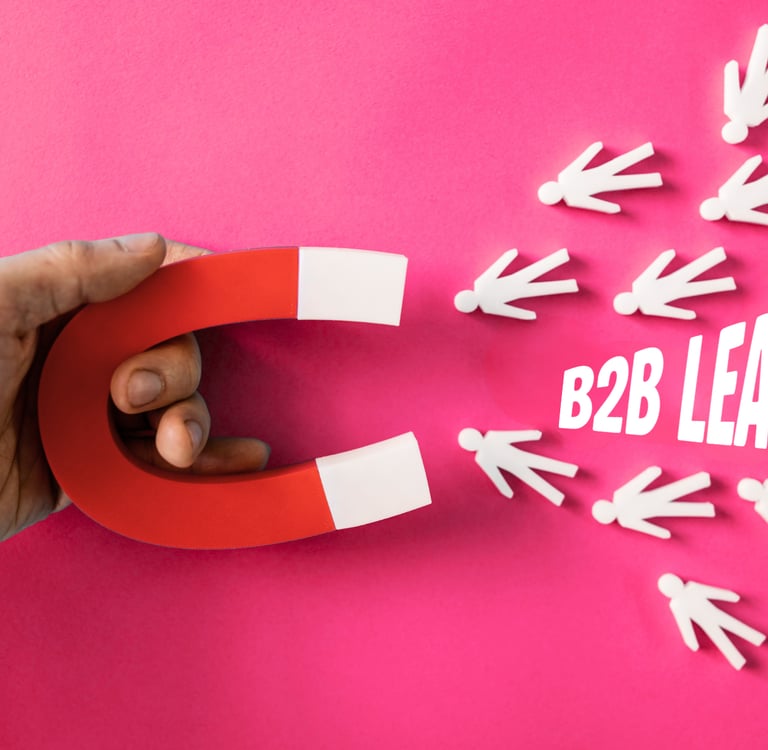
For many small and medium sized businesses, growth depends on a steady flow of new opportunities. Yet lead generation often feels unpredictable. Enquiries appear occasionally, marketing activity can feel disconnected, and promising conversations sometimes fade away without a clear next step. The reality is that capturing B2B leads is not simply about generating more enquiries. It is about creating a structured system that attracts the right prospects, captures their interest, and gradually moves them towards becoming customers.
When the foundations are clear and consistent, lead generation becomes far more reliable and far more commercially valuable. At its simplest, B2B lead generation is the process of attracting interest from other businesses that may benefit from your product or service. A lead might be someone who completes a website enquiry form, downloads a guide, attends an event, or starts a conversation after seeing a piece of content.
For SMEs, this matters because it creates a pipeline of future opportunities. Instead of relying purely on referrals or occasional inbound enquiries, the business begins to develop a more predictable flow of potential clients. The key point is not just generating leads, but generating the right leads.
Before investing time or budget in lead generation, it is important to define your Ideal Customer Profile, often called an ICP. This describes the type of organisation that is the best fit for your business An ideal customer profile might include factors such as sector, company size, location, turnover, or the role of the decision maker you typically work with. When this picture is clear, marketing messages become more relevant and outreach becomes far more focused.
Without this clarity, marketing activity often attracts a high number of enquiries that are unlikely to convert. When the right profile is defined, the quality of leads improves significantly.
Once this foundation is in place, the next step is creating clear ways for prospects to engage with your business. For most SMEs, effective lead generation usually comes from combining several simple channels.
Your website is often the starting point. It should make it easy for visitors to get in touch through a clear and straightforward enquiry form. Simple forms tend to work best, asking only for essential information such as name, company, email and a short message.
Another effective approach is offering useful downloadable resources. This might be a short guide, checklist or practical template that helps solve a common problem for your audience. In exchange for the resource, visitors provide their contact details.
Content also plays an important role. Publishing useful insights, practical advice or industry perspectives builds credibility and helps potential clients discover your business while researching solutions. Over time, this positions your organisation as knowledgeable and trustworthy. We often support businesses with developing this kind of educational content that answers the real questions decision makers are already asking.
LinkedIn has also become one of the most valuable platforms for B2B visibility. Sharing thoughtful insights, contributing to conversations and building professional relationships can generate meaningful engagement and new enquiries. For many SMEs it is the most relevant place to start when building a professional audience.
Some organisations also use paid channels such as Google search advertising or LinkedIn campaigns to accelerate visibility. When supported by clear messaging and well designed landing pages, paid activity can quickly place your business in front of a targeted audience.
Email marketing and newsletters also remain one of the most cost effective lead generation and nurturing tools available to SMEs. A regular email sent to a warm audience, such as past enquiries, existing contacts, or people who have downloaded resources, helps keep your business visible over time. Sharing useful insights, short updates or practical advice allows you to stay relevant to prospects who may not be ready to buy immediately but could become future opportunities.
Events and webinars can also be powerful lead generation channels. Whether hosted online or in person, they create an opportunity for real time conversation with potential clients. This interaction often leads to higher quality leads because attendees are already investing time to learn more about a topic that matters to them. For many SMEs, well targeted webinars, workshops or industry events can generate valuable discussions that later develop into commercial opportunities.
Importantly, effective lead generation rarely relies on a single channel. The strongest results usually come from a joined up approach. One channel may introduce your business, another may reinforce credibility, and another may capture the enquiry. Over time, businesses begin to identify which channels perform best and then support those with complementary activity across other platforms.
In practice, this means combining approaches rather than relying on just one. Content can support social activity. Paid campaigns can drive traffic to useful resources. Email newsletters can reinforce expertise. Website enquiries can feed directly into a CRM system. When these elements work together, lead generation becomes far more consistent.
Another increasingly valuable factor is recognising intent signals. These are the actions that suggest a potential buyer may be actively researching a solution. For example, a prospect repeatedly visiting key pages on your website, downloading multiple resources, opening several email newsletters, or engaging with multiple pieces of content may indicate growing interest.
Tracking these signals helps businesses identify which prospects are moving closer to a buying decision. Rather than treating every lead the same, marketing and sales teams can prioritise those showing stronger intent and respond at the right moment.
Capturing leads, however, is only the beginning. What happens next often determines whether the opportunity progresses or quietly disappears.
This is where a Customer Relationship Management system becomes essential. A CRM provides a central place to store contact details, track conversations and manage opportunities. Instead of leads sitting across individual inboxes or spreadsheets, everything is visible in one system.
This clarity makes follow up far easier. It also helps teams understand where each opportunity sits within the sales pipeline. Many SMEs initially underestimate how valuable this visibility becomes as enquiries increase. We regularly support organisations with improving how their CRM is used so that leads are followed up consistently and opportunities are not lost.
If you are interested in learning more about how CRM systems work and why they are so valuable for growing businesses, you may find our article What Is a CRM, and Why Should Small Businesses Connect It to Their Marketing? a useful place to start.
Speed of response also matters more than many businesses realise. When a prospect makes an enquiry or downloads information, responding quickly shows professionalism and keeps the conversation active while interest is still high. It is equally important to record every interaction. Calls, emails, meetings and messages all help build a clearer picture of the relationship and the level of interest from the prospect. Not every lead will be ready to buy immediately. In many B2B sectors the buying process can take weeks or even months. Some contacts may still be exploring options or gathering information. This is where lead nurturing becomes important. Staying visible through useful content, insights or occasional updates helps maintain the relationship until the timing is right. The aim is not to push for a sale, but to remain helpful and relevant.
Finally, effective lead generation should always be measured. Businesses benefit from understanding how many enquiries are generated, how many become qualified opportunities and how many ultimately convert into customers.
These insights reveal which marketing activities are producing the strongest results. Over time this allows SMEs to focus investment on the channels and approaches that genuinely contribute to growth.
Lead generation is rarely perfect from the beginning. Messaging evolves, targeting improves and marketing channels become clearer with experience. Small adjustments across several areas often create a noticeable improvement in the quality of opportunities entering the pipeline.
For SMEs, B2B lead generation works best when it is treated as an ongoing system rather than a one off marketing activity. With a clear ideal customer profile, consistent ways to capture interest, a well managed CRM and thoughtful follow up, the process becomes far more predictable.
If you are looking to strengthen how your business generates and manages leads, it can be valuable to review how your current pipeline works from first enquiry through to closed sale. At WrightWay Marketing we support businesses with defining clear lead pipelines and creating marketing that consistently drives the right enquiries. If you would like to discuss how this could work for your organisation, get in touch today.